
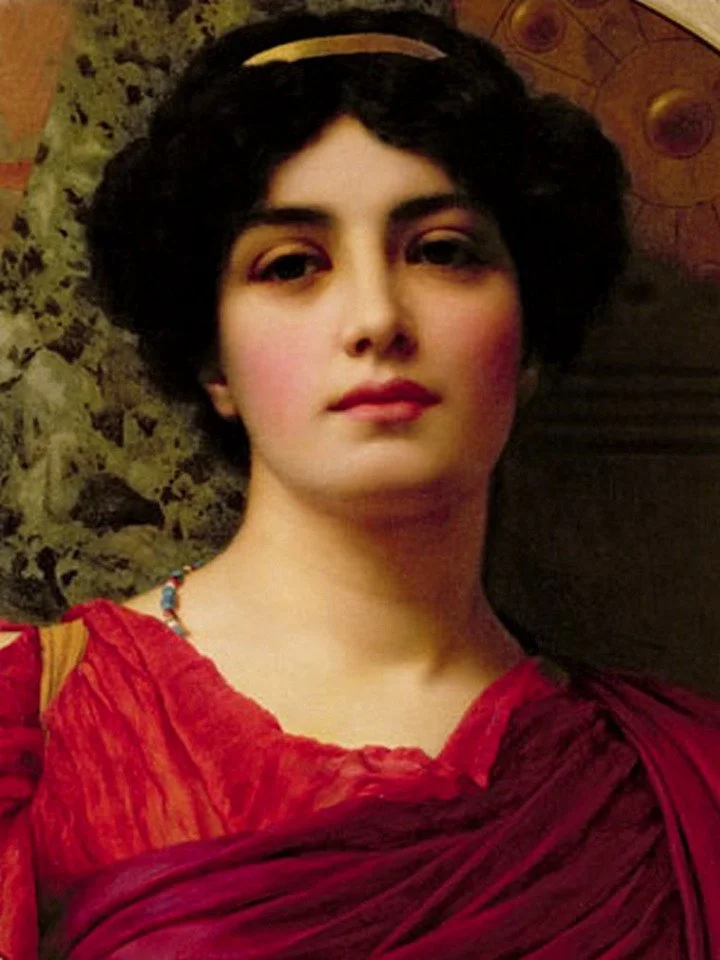
SAPPHO
The Tenth Muse
She was born around 615 BC to an aristocratic family on the Greek island of Lesbos. She was known in antiquity as a great poet: Plato called her “the tenth Muse” and her likeness appeared on coins. It is unclear whether she invented or simply refined the meter of her day, but today it is known as “Sapphic” meter. Her poems were first collected into nine volumes around the third century BC, but her work was lost almost entirely for many years. Merely one twenty-eight-line poem of hers has survived intact, and she was known principally through quotations found in the works of other authors until the nineteenth century. Sappho is not only one of the few women poets we know of from antiquity, but also is one of the greatest lyric poets from any age. Most of her poems were meant to be sung by one person to the accompaniment of the lyre. Rather than addressing the gods or recounting epic narratives, Sappho’s verses speak from one individual to another.
Sappho’s school devoted itself to the cult of Aphrodite and Eros, and Sappho earned great prominence as a dedicated teacher and poet. (Poets)
In the ode to Aphrodite, the poet invokes the goddess to appear, as she has in the past, and to be her ally in persuading a girl she desires to love her. Frequent images in Sappho’s poetry include flowers, bright garlands, naturalistic outdoor scenes, altars smoking with incense, perfumed unguents to sprinkle on the body and bathe the hair—that is, all the elements of Aphrodite’s rituals. (Brittanica)